
Beyond simple camera installation
from optical design to AI analysis,
we build solutions tailored to your site.Beyond simple camera installation
from optical design to AI analysis,
we build solutions tailored to your site.Beyond simple camera installation
from optical design to AI analysis,
we build solutions tailored to your site.
Custom Optical SolutionsCustom Optical SolutionsCustom
Optical Solutions
The first step that determines inspection performance
a custom solution for the optimal optical designThe first step that determines inspection performance
a custom solution for the optimal optical designThe first step that determines inspection performance a custom solution for the optimal optical design
We analyze the inspection target, defect characteristics,
and process environment to design an optical system optimized for your site. This secures the high-quality image data needed for inspection, laying the foundation for strong inspection performance.We analyze the inspection target, defect characteristics, and process environment to design an optical system optimized for your site.
This secures the high-quality image data needed for inspection, laying the foundation for strong inspection performance.We analyze the inspection target, defect characteristics, and process environment to design an optical system optimized for your site.
This secures the high-quality image data needed for inspection, laying the foundation for strong inspection performance.
Inspection for Harsh EnvironmentsInspection for Harsh EnvironmentsInspection for
Harsh Environments
We deliver reliable inspection even in environments with severe heat, dust, and vibration. Hardware designed specifically for harsh manufacturing sites, paired with AI models, ensures stable operation.We deliver reliable inspection even in environments with severe heat, dust, and vibration.
Hardware designed specifically for harsh manufacturing sites, paired with AI models, ensures stable operation.We deliver reliable inspection even in environments with severe heat, dust, and vibration. Hardware designed specifically for harsh manufacturing sites, paired with AI models, ensures stable operation.
Modular Vision PlatformModular Vision PlatformModular Vision Platform
Combine inspection modules to fit a wide range of inspection environments, and secure maintainability and scalability on a shared platform.Combine inspection modules to fit a wide range of inspection environments,
and secure maintainability and scalability on a shared platform.Combine inspection modules to fit a wide range of inspection environments, and secure maintainability and scalability on a shared platform.
Proven solutions
that solve real challenges
across many industries.Proven solutions that solve
real challenges across many industries.Proven solutions that solve
real challenges across many industries.


 Partner


 Partner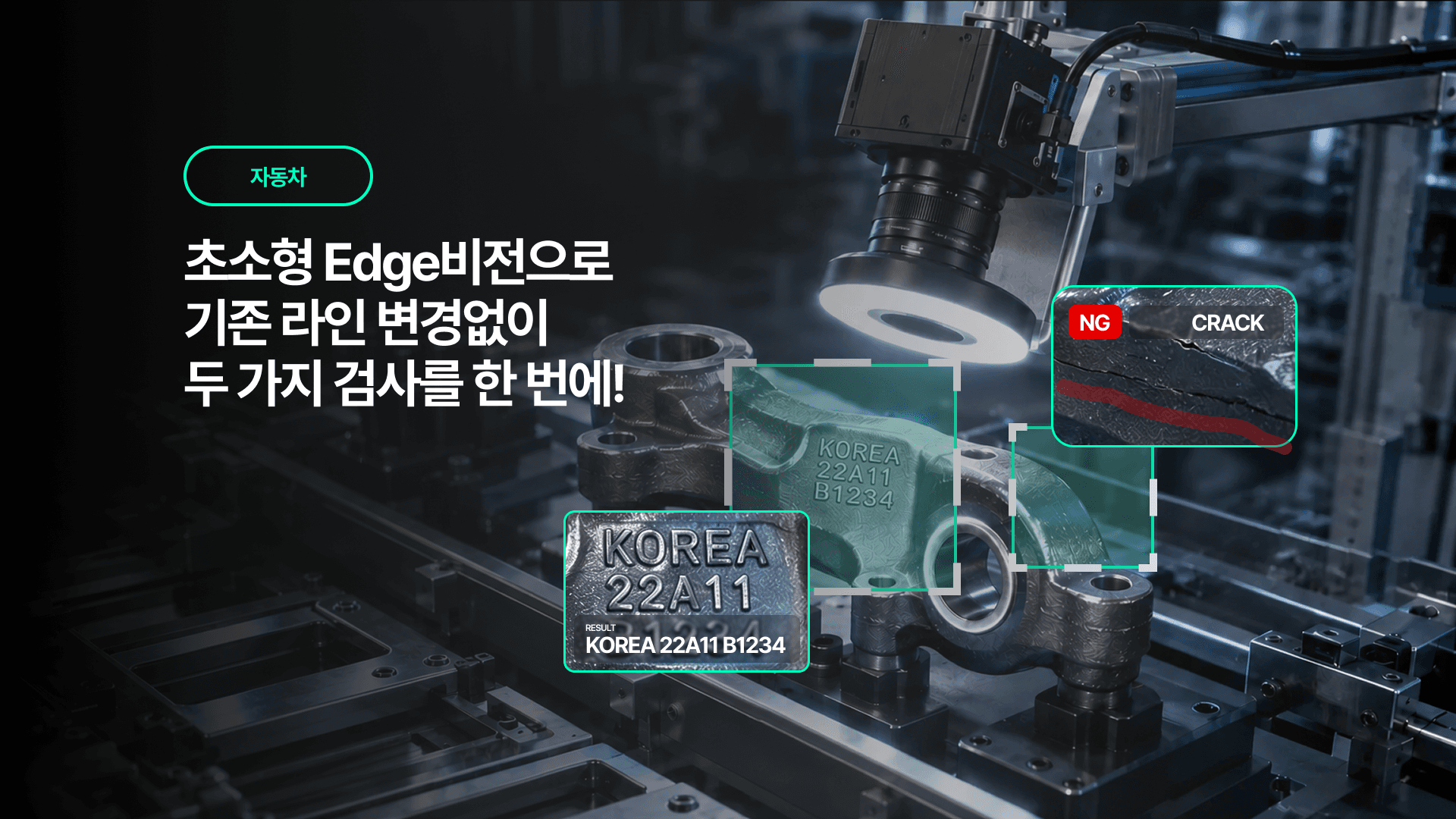
100ms-Class Integrated Marking and Crack Inspection Powered by Ultra-Compact Edge Vision, Marking Inspection for Automotive Forged Parts
Key Highlights Built an inspection zone within the existing production line using ultra-compact edge vision Improved marking recognition stability by reducing surface glare with ring lighting Combined marking and crack inspection within a single stage Reduced the need for additional large-scale equipment investment --- Background In an automotive forged-parts production line, an existing smart vision system was already being used for crack inspection. However, surface glare on the parts made it difficult to perform marking inspection at the same time. Adding a separate smart vision system for marking inspection would have required additional equipment investment and installation space, creating the need for a more efficient alternative. In addition, the production process required each part to be inspected within 100 ms, making it difficult for conventional methods to meet both the speed and accuracy requirements of a high-speed production line. --- Solution: Ultra-Compact Edge Vision-Based AI Inspection System BISON implemented an ultra-compact edge vision-based AI inspection system and created a compact inspection zone within the existing production line. Ring lighting was used to minimize the impact of surface glare, while the compact vision setup enabled marking inspection even in a space-constrained production environment. As a result, marking inspection could be performed alongside the existing crack inspection within a single inspection stage. This made it possible to build a high-speed inspection environment without installing additional large-scale vision equipment, improving inspection efficiency, equipment utilization, and quality reliability at the same time. --- Results By combining ultra-compact edge vision with ring lighting, BISON added a marking inspection zone directly to the existing production line without requiring additional large-scale vision equipment. A process that previously supported only crack inspection was expanded to include marking inspection within the same stage, while recognition stability was improved in areas that had previously been difficult to inspect due to surface glare. This expanded the inspection scope while minimizing the impact on production speed, improving both the efficiency and reliability of quality inspection. --- Customer Feedback Previously, crack inspection was possible, but surface glare made it difficult to perform marking inspection at the same time. Adding another smart vision system for marking inspection would have required significant additional cost and installation space. After introducing the edge vision system, we were able to add marking inspection without making major changes to the existing production line and perform both crack and marking inspection within a single stage. This improved inspection efficiency while expanding the scope of quality inspection without the burden of additional large-scale equipment investment.
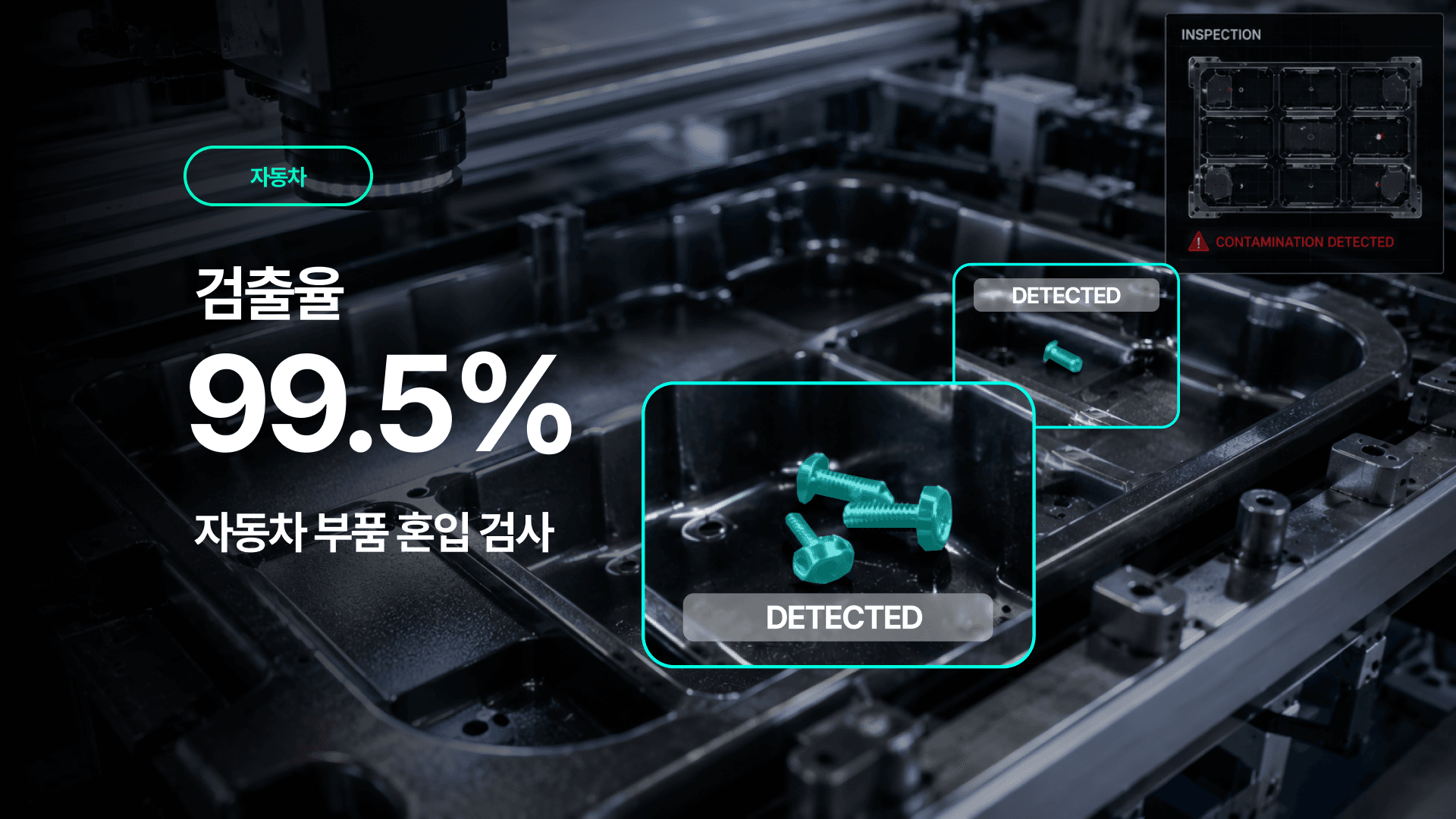
AI Quality Gate for Real-Time Contamination Prevention in Space-Constrained Production Lines
Key Highlights Real-time detection of residual bolts and potential foreign-part contamination in trays Immediate operator alerts via warning lights when anomalies are detected Early prevention of contamination risk at approximately 0.05% Reduced workload associated with quality issue response --- Background In the automotive parts manufacturing process, lubricant-coated bolts occasionally remained in trays instead of being properly transferred to the next stage of production. If these residual bolts entered subsequent processes, they could lead to product quality issues. In the event of an actual escape, quality response personnel had to be deployed to the site, often requiring approximately two weeks of additional response work and creating a significant operational burden. Because the production area was limited and multiple lines were operating simultaneously, it was also difficult for operators to inspect every tray manually. As a result, an automated inspection system was required to detect potential contamination in real time and enable operators to respond immediately. --- Solution: Edge Vision-Based AI Inspection System BISON implemented an edge vision-based AI inspection system optimized for space-constrained production environments. Using cameras and AI vision algorithms, the system detects residual bolts and potential contamination in trays in real time. When an anomaly is identified, warning lights immediately alert nearby operators so they can take action without delay. This approach overcomes the limitations of manual visual inspection while maintaining a seamless inspection process without disrupting production flow. --- Results With the edge vision-based AI inspection system in place, residual bolts and potential contamination in trays can now be detected in real time. By automating a task that previously relied on manual visual inspection, the system enables early prevention of contamination risk at approximately 0.05%. In addition, warning lights allow operators to respond immediately when anomalies occur, helping reduce the likelihood of quality issues while also lowering the workload required for on-site quality response. --- Customer Feedback Since implementing the AI inspection system, we have been able to detect residual bolts in trays in real time and reduce contamination risks before they affect downstream processes. The system addresses the limitations of manual inspection while enabling operators to recognize abnormal conditions immediately, improving both quality stability and operational response efficiency.
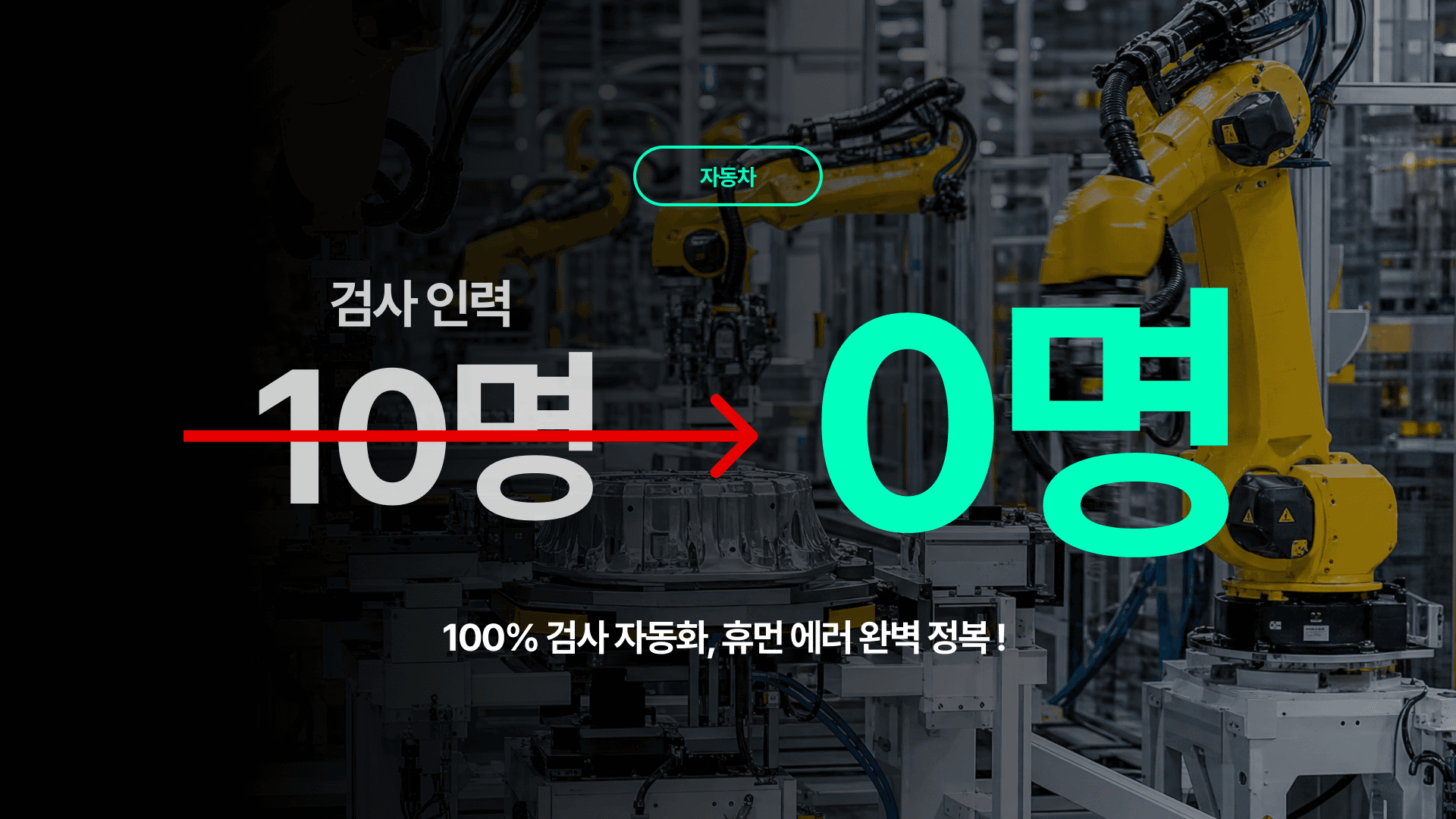
High-Speed 100% AI Visual Inspection Replacing 10 Manual Inspectors, 100% AI Visual Inspection System for Automotive Forged Parts
Key Highlights Reduced manual inspection staffing from 10 operators to zero 6-lane indexing structure with five inspection stages 0.75-second cycle time per part for high-volume production Established a data-driven quality response process --- Background Company J, a Korean automotive parts manufacturer, relied on 10 manual inspectors to perform visual inspection of automotive components. As daily production exceeded 35,000 parts, recurring issues emerged due to inspector shortages, accumulated operator fatigue, and increased human error, resulting in defect escapes. In particular, fine scratches and burr defects were difficult to identify consistently through manual inspection. Detection performance also varied depending on lighting conditions, making stable quality control challenging. --- Solution: 6-Lane Indexing Structure with Five Inspection Stages BISON implemented an AI visual inspection system built around a 6-lane indexing structure. The system performs 100% inspection across the entire product surface using five inspection stages: top, bottom, side 1, side 2, and inner surface. With a cycle time of 0.75 seconds per part, the system was designed to support stable 100% inspection even in high-volume mass-production environments. --- Results The visual inspection process previously performed by 10 manual inspectors was replaced with BISON’s AI visual inspection system, reducing the number of dedicated manual inspectors to zero. By standardizing inspection criteria and capturing inspection data, the customer improved both the reliability and efficiency of quality control and issue response. --- Customer Feedback Previously, we faced ongoing labor costs for manual inspection as well as the burden of responding to quality issues caused by human error. After introducing BISON’s AI visual inspection system, we were able to perform consistent inspections based on our quality team’s standards. We can also provide customers with data-based inspection records, significantly reducing the workload required to respond to quality issues.